How Eagle Ford Clay Shapes Frisco Water Damage Restoration
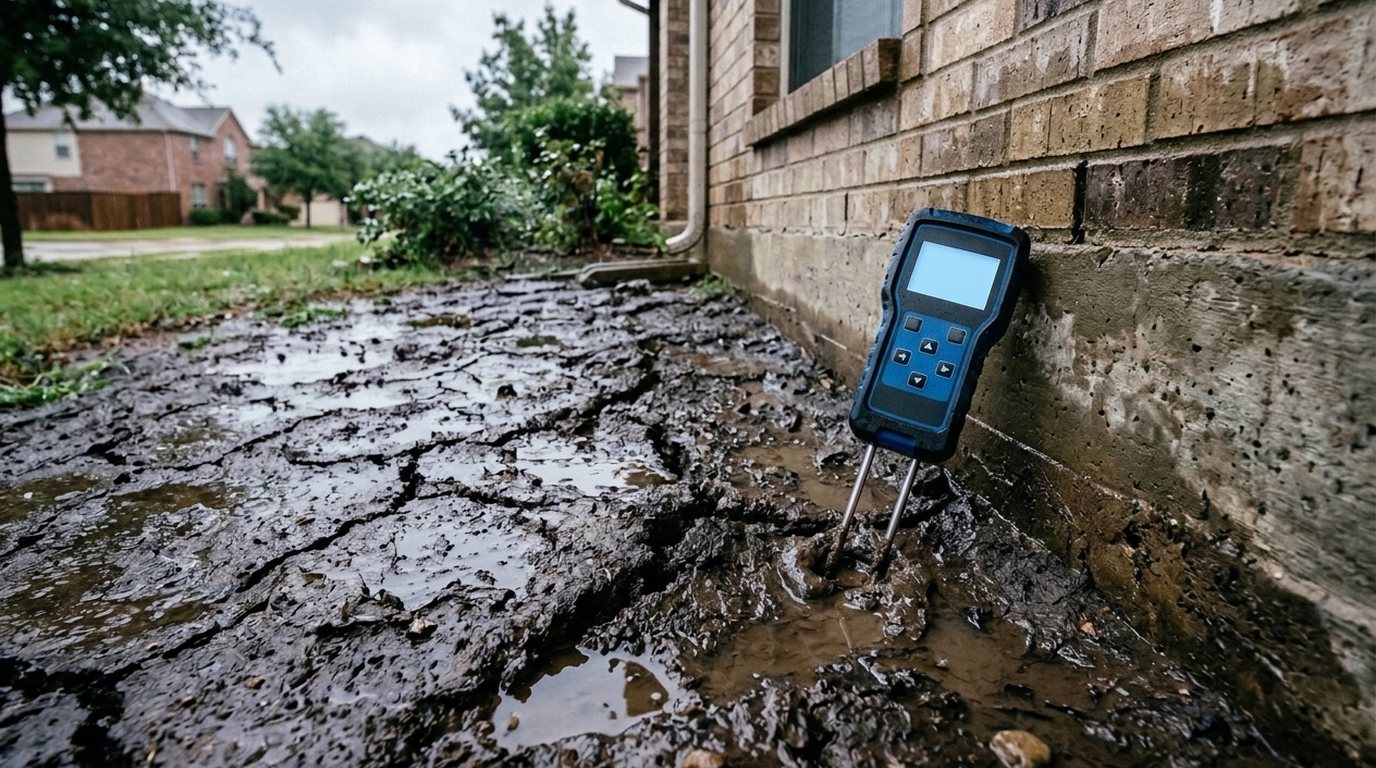
Eagle Ford shale formations across Collin County contain high-plasticity smectite clays that expand violently when exposed to moisture and shrink dramatically during summer desiccation. This extreme shrink-swell dynamic imparts severe bending moments to post-tension concrete slabs, shearing subterranean plumbing lines and wicking groundwater into structural flooring assemblies. Immediate perimeter isolation and professional water damage restoration are vital to mitigate foundation heaving throughout Frisco residential properties.
Keywords: Eagle Ford clay, slab heave, soil mechanics, plumbing shear, Frisco, moisture mitigation.
Eagle Ford Clay Mechanics in Collin County
The geologic profile underlying Frisco is dominated by the Eagle Ford shale formation, characterized by expansive montmorillonite clay minerals. These microscopic clay platelets possess active interlayer spaces that absorb water molecules, expanding up to forty percent by volume when wet. When plumbing connections crack beneath a residential foundation slab, localized water saturation triggers differential heave. This uneven upward thrust exerts concentrated upward stresses that crack interior ceramic tiles, deflect load-bearing stud walls, and fracture rigid plumbing supply lines throughout the building footprint.
Immediate Triage and Water Isolation Steps
When sub-slab plumbing shears occur or sudden surface intrusion develops in Frisco, homeowners must initiate immediate mechanical stabilization to limit structural migration:
- Main Supply Isolation: Rotate the primary municipal water meter curb stop valve clockwise one-quarter turn using a street key to arrest pressurized water loss beneath the slab foundation.
- Electrical Circuit Disconnection: De-energize dedicated breaker switches serving submerged living areas and sub-slab conduit runs to eliminate ground-fault electrical hazards.
- Surface Liquid Evacuation: Deploy wet-vacuum recovery canisters to extract free-standing water along baseboards before moisture wicks up perimeter drywall assemblies.
- Mechanical Fixture Assessment: Verify that plumbing supply lines and shutoffs operate properly according to standardized toilet flush valve maintenance procedures to rule out secondary fixture overflow.
Insurance Claim Traps and Policy Deadlines
Standard homeowner insurance policies across Texas contain specific exclusions regarding gradual seepage and hydrostatic earth movement. Insurers routinely deny water claims if sub-slab leakage is determined to have occurred over a prolonged period exceeding fourteen days. Property owners must document the sudden manifestation of pressure drops and visible moisture using timestamped photography. Contacting a water damage cleanup team immediately establishes verifiable psychrometric documentation and thermal inspection records required for legitimate policy adjustment.
Delaying extraction allows expansive clay swelling to destabilize structural post-tension cable tendons, generating tens of thousands of dollars in uninsurable foundation distress. Prompt water damage restoration prevents secondary microbial colonization and stabilizes soil hydration beneath the foundation perimeter.
Frisco Soil Inquiries
How does Eagle Ford clay damage post-tension foundation slabs?
Expansive clay absorbs escaping plumbing water and swells unevenly. This differential upward pressure exerts concentrated upward bending moments against post-tension slabs, causing concrete cracking, interior drywall racking, and door misalignment.
What is the critical timeline for reporting sub-slab water losses in Texas?
Texas property policies typically require written notice of loss within thirty days, but immediate mitigation is mandatory. Failure to arrest active water flow within forty-eight hours can compromise coverage under standard policy wear-and-tear exclusions.